
Loading Qualify IAS…
Loading Qualify IAS…
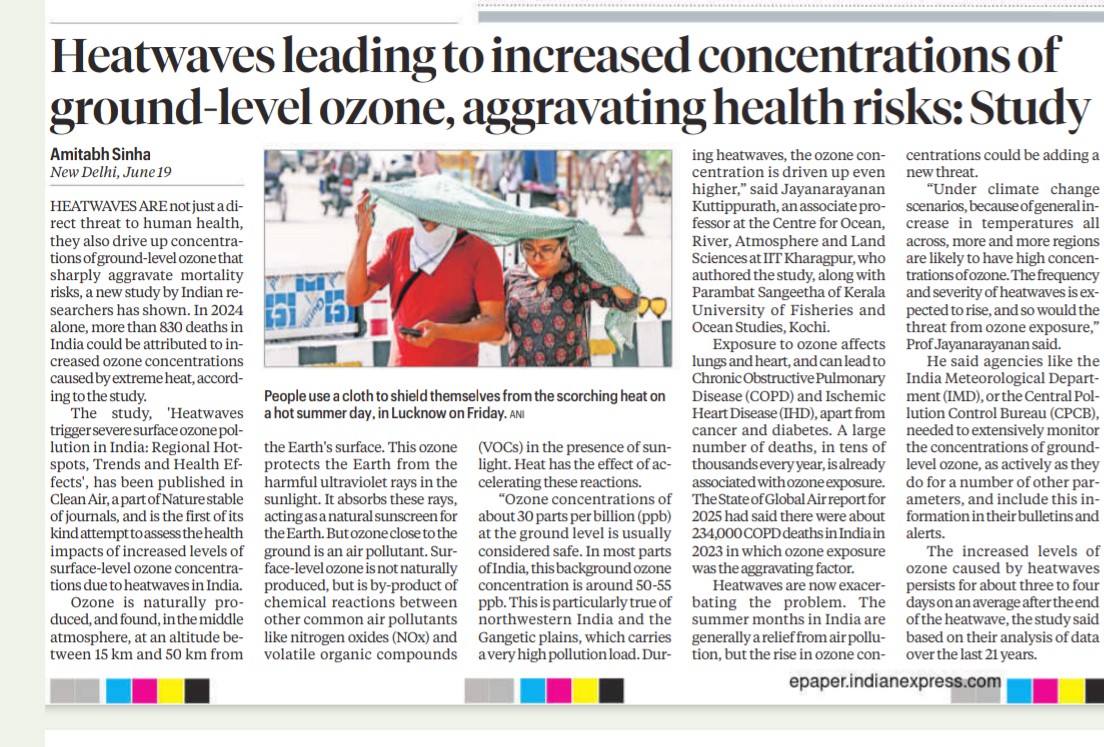
Heatwaves and Ground-Level Ozone: A Growing Health Threat in India
A recent study titled "Heatwaves trigger severe surface ozone pollution in India: Regional Hotspots, Trends and Health Effects", published in Clean Air (Nature Portfolio), highlights how increasing heatwaves are raising ground-level ozone concentrations, thereby aggravating health risks.
What is Ground-Level Ozone?
Ozone occurring in the stratosphere (15–50 km above Earth) protects life from harmful ultraviolet radiation.
However, ground-level ozone is a harmful air pollutant.
It is formed through chemical reactions between:
Nitrogen Oxides (NOx), and
Volatile Organic Compounds (VOCs),
in the presence of sunlight.
High temperatures accelerate these reactions, leading to increased ozone formation.
Key Findings of the Study
In 2024, over 830 deaths in India were attributed to increased ozone levels caused by extreme heat.
Safe ozone concentration is around 30 parts per billion (ppb).
In many parts of India, background levels range between 50–55 ppb.
Northwestern India and the Gangetic Plains are particularly vulnerable due to high pollution loads.
Ozone concentrations remain elevated for 3–4 days even after a heatwave ends.
Under climate change scenarios, both the frequency and severity of heatwaves are expected to increase, intensifying ozone pollution.
Health Impacts
Exposure to ground-level ozone affects the lungs and cardiovascular system, leading to:
Chronic Obstructive Pulmonary Disease (COPD).
Ischaemic Heart Disease (IHD).
Increased risks of cancer and diabetes.
Higher mortality rates.
According to the State of Global Air Report 2025, around 2.34 lakh COPD deaths in India in 2023 had ozone exposure as an aggravating factor.
Regional Hotspots
Northwestern India
Gangetic Plains
These regions experience high levels of pollution and are therefore more susceptible to ozone formation during heatwaves
Concerns under Climate Change
Rising temperatures will increase ozone concentrations across more regions.
Heatwaves will become more frequent and severe.
Surface ozone pollution may emerge as a major public health challenge.
Way Forward
India Meteorological Department (IMD) and Central Pollution Control Board (CPCB) should intensify monitoring of ground-level ozone.
Ozone concentration data should be incorporated into weather bulletins and public advisories.
Strengthen measures to reduce emissions of NOx and VOCs.
Integrate ozone pollution management into climate adaptation and public health strategies.
Heatwaves are no longer merely an extreme weather event; they are also amplifying ground-level ozone pollution, posing serious risks to human health. Addressing this emerging challenge requires better monitoring, emission control, and climate-resilient public health policies.